Work in Progress!
I am currently planning on returning to the South Atlantic Modern Language Association in November 2026. I plan to propose how early postmodern literature predicted the consumerist society today, showcasing how postmodern elements show up in modern marketing. To support this claim, I will use the beauty industry and brand ad campaigns as case studies.

"Demystifying Black Women's Stereotypes"
South Atlantic Modern Language Association Conference, November 2025
Being a Black woman is not always black and white. Class, location, education, size, family, and even skin tone all come into account when looking at life through a Black woman’s eyes. These differences are especially important when it comes to writing Black women because it shows that not everyone’s story is the same, especially when we write characters. However, Black women are often portrayed in the same three stereotypical roles: the Mammy, the Sapphire, and the Jezebel. The stereotypes can lead to increased sexual violence, unmanageable expectations, or confusing misunderstandings—all of which are harmful. These labels can go back as far as Biblical times, and they pigeonhole what Black women are supposed to be and does not expand our knowledge about what Black women can be.
"The Impact of Artificial Intelligence on the Preservation of Authenticity and Creativity"
Southern Humanities Conference, January 2025
As artificial intelligence (AI) develops, many scholars believe that the values society previously emphasized have been replaced with a desire for automation and efficiency. Despite growing apprehension about the future of writing in particular, I propose that human writing will remain relevant. I support my argument first by examining the history of writing and how the accessibility of writing has changed the creative process. Second, and more importantly, the ideas of Walter Benjamin offer a philosophical explanation for the relevancy of writing as an art.
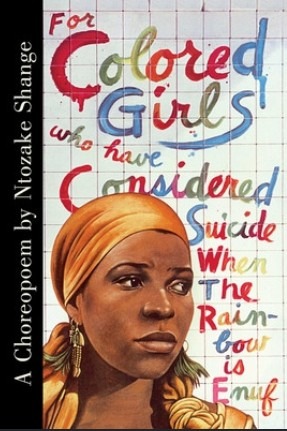
The choreopoem “For Colored Girls Who Have Considered Suicide / When the Rainbow is Enuf” communicates the different emotions of growing up as a Black woman through poetry and dance. She uses different colors of the rainbow to represent the singular personalities found within us, and looks at life through the lens of sisterhood, relationships, familial obligations, sexual desire, and love. In this paper, I present Shange’s work to help us consider adding depth when we write Black female characters.
The stereotypes often seen in Black female characters are not reflective of every Black woman. There is a level of depth and surprise to be found within each woman. Writing Black women within the confines of stereotypes are not only inaccurate, but it leaves out the many qualities that makes us so unique. But the theme of SAMLA ’97 is knowledge, so I invite my listeners to consider all the shades of the rainbow that black women come in, and expand our knowledge about how we can write Black women as what they can be.
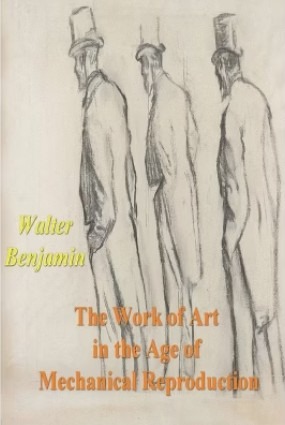
Writing has been reproducible on a mass scale since the invention of the Gutenberg printing press. Many more developments followed, from lithography to inkjet printers. As a result of these inventions, writing as an art and as a source of information has become accessible to an increasing number of people. The purpose of writing shifted to a focus on the product rather than the process because of mass production. The introduction of AI complicates the creative process and causes many to re-evaluate the definition of creativity. This reconsideration will emphasize the presence of creativity and authenticity society has valued in the arts for years.
Furthermore, the influence of automation and the digital age on the arts is not a novel idea. Philosopher Walter Benjamin predicted the mass production of the arts in his paper “The Work of Art in the Age of Mechanical Reproduction.” Benjamin defines authenticity in relation to film. However, I apply his criticism and ideas to the discipline of writing, and I argue that the field of writing will survive digital production. The creative process is a critical component of original writing and cannot be reproduced by a computer. Large language models can reproduce the product, but the context that piece is created in can never be replicated authentically again. Benjamin argues that the environment in which art is created is not able to be re-created by any machine, and as a result, preserving the authenticity of the piece.
I propose that writing will remain a relevant field because of the place creativity and authenticity have in our society. Writing will remain unique because the specific environment in which art is created will never be able to be replicated. The product may be duplicated, but never the environment, which sets writing pieces and other art forms apart from others that were mass reproduced or created by a computer. Using the ideas of Walter Benjamin, I show how the presence and influence of authenticity and creativity in the arts will lead to the preservation of original writing.